Key Moments
Re:Monster's Popularity Surge
Re:Monster has unexpectedly become one of Crunchyroll Spain's most-watched anime, surpassing other popular titles.Formulaic Plot and Character Inconsistency
The anime features a goblin protagonist who rapidly becomes overpowered, but lacks consistent character ethics and narrative coherence.Heavy Reliance on Fan Service
Re:Monster prioritizes sexual scenes and fan service over character development, causing contradictions in storytelling.Isekai Genre Saturation
The success of Re:Monster illustrates how the isekai genre has become formulaic, overused, and lacking innovation.In the past, the isekai genre seemed to be bursting with possibilities and potential. Anime like “Re:Monster” or “Tensei Shitara Slime Datta Ken,” among others, led us to believe that we were witnessing the emergence of a new genre whose range of possibilities would eventually give rise to increasingly incredible stories. But alas, that’s not what happened. Today, isekai has become a recycled genre where the only thing that matters is having a protagonist who gains powers one after another, and possibly, a harem to boot. The latest proof of this? “Re:Monster.”
Re:Monster becomes one of Crunchyroll’s most-watched anime with little effort
Every quarter, I make it a habit to review the most popular anime on Crunchyroll Spain, mainly to see which new anime are making the most significant impact among fans. And yes, obviously something like “Kaiju No. 8” has already established itself as a show with many followers. But guess what? Right now, “Re:Monster” is ahead in terms of popularity on the streaming platform.
Re:Monster sneaks into the top 3 of Crunchyroll’s most-watched anime

If so many people are watching it, then “Re:Monster” must have something good going for it, right? The same could be said for the burgers at certain fast-food restaurants, and I think we all know the answer to that. But is “Re:Monster” really as ‘bad’ as I’m making it sound? The problem isn’t necessarily that it’s bad; I’m not going to claim that it’s a terrible anime. The issue is that, like so many other isekai, it achieves a lot with very little:


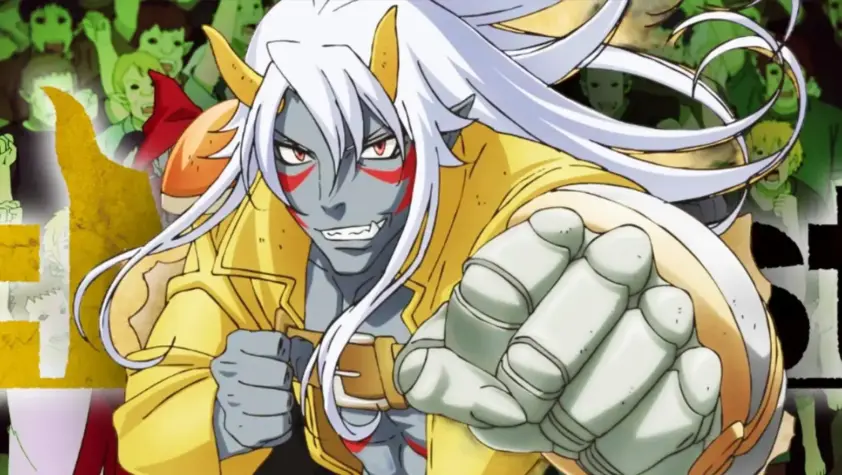
- The premise of Re:Monster revolves around a human who is reincarnated as a goblin, who then becomes insanely powerful by eating everything in sight. Practically overnight, we go from seeing a ‘peculiar’ goblin to the Goblin Giga Chad, the most overpowered being in the universe.
- Moreover, Re:Monster doesn’t place much emphasis on establishing narrative coherence for its characters and world. At first, the protagonist seems to be driven by the behaviors of the goblins, which could be interesting in terms of having a main character who is definitely outside the spectrum of ‘good.’ But that doesn’t last long. The protagonist’s ethical stance constantly fluctuates, which ultimately leaves him with a confused and inconsistent personality.
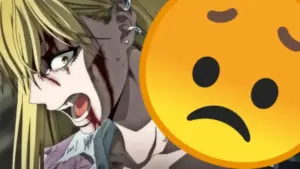
- And if all of that weren’t enough, Re:Monster relies heavily on fan service and sexual scenes that won’t sit well with many viewers. I’m not being a prude; everyone can appreciate a bit of ecchi. But with Re:Monster, it seems that these elements are prioritized over the characters’ behaviors, which ultimately generates all sorts of contradictions.
In conclusion, Re:Monster is a clear example of how the isekai genre has become a formulaic and over-saturated category in the anime world. Despite its popularity, it’s essential to critically analyze the elements that make up this type of anime and question whether they contribute to the medium’s growth and evolution.